
Corporate Video Production What Businesses Should Consider Before Starting by Scriza Pvt. Ltd.
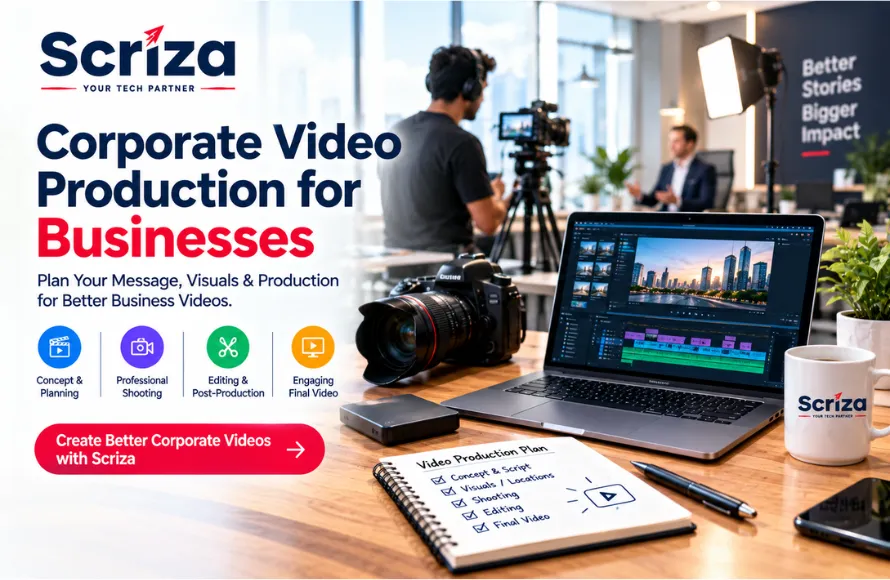
A corporate video may look like a simple mix of visuals, interviews, music, and branding. But the work behind a good video starts long before the camera is switched on. Before planning a shoot, a business needs to know what it wants to say, who it wants to reach, where the video will be used, and what viewers should take away from it. Without this planning, even a professionally filmed video can miss the point. Corporate video production is not simply about recording footage. It is about taking a business message and turning it into a visual story that people can understand, connect with, and remember. Before discussing cameras, locations, or editing, ask one simple question: Why are you making this video? A corporate video might be created to: Introduce a company Explain a product or service Showcase a workplace Present a new business initiative Build brand awareness Support sales presentations Train employees Communicate company values Share information with investors or partners The purpose will influence almost every other production decision. For example, a company introduction video may focus on the people, work, and capabilities of the business, while an employee training video may need a much more direct and instructional approach. A video becomes more effective when it is created with a specific audience in mind. Before developing the concept, think about: Who will watch the video? What do they already know about the business? What information do they need? What questions might they have? What should they do after watching? A video aimed at potential customers may focus on problems, solutions, and business value. An internal video may need to focus more on information and clarity. Knowing the audience helps determine the right language, tone, visuals, and overall approach. One common problem with corporate videos is trying to include everything. A company may want to talk about its history, services, achievements, team, technology, clients, facilities, values, and future plans—all in one video. That can quickly become too much for the viewer. Instead, start with one question: What is the one thing you want people to remember after watching the video? Once that message is clear, the supporting information becomes much easier to choose. A script gives the production a clear direction. Depending on the type of video, the script may include: Opening Company introduction Main message Product or service explanation Interviews Demonstrations Supporting visuals Call to action The script does not need to sound complicated or overly formal. In many cases, corporate communication works better when the language feels natural and easy to follow. The goal is to communicate clearly—not to use impressive words simply because it is a corporate video. A corporate video should not rely entirely on interviews or narration. Show people doing their work. Show the product in use. Show the workplace, process, technology, or customer experience wherever relevant. Depending on the business, useful footage could include: Office environments Manufacturing processes Product demonstrations Team interactions Customer experiences Technology in use Events Workplace activities Behind-the-scenes moments These visuals give viewers a better understanding of what the business actually does. The important part is that every visual should support the story rather than simply fill the screen. There is no single format that works for every corporate video. A company profile video can introduce the business, its people, capabilities, work, and overall identity. This format focuses on what the business offers and how it can help customers. Leadership, employees, experts, or other relevant people can share information and perspectives directly with the audience. Useful when a product, process, technology, or service needs to be explained in a simple way. This can showcase workplace culture, employees, values, and the overall employee experience. The format should always follow the purpose of the video rather than the other way around. Good pre-production can prevent many problems later. Before the shoot, consider: Locations Shooting schedule People appearing on camera Equipment Lighting Audio Props or products Wardrobe Permissions Travel requirements Backup plans These details may seem small, but they can affect how smoothly the shoot runs and how much usable footage you get. A little planning beforehand can save time and avoid unnecessary production costs. A business may invest heavily in cameras and visuals but overlook audio. That can be a mistake. Poor sound, background noise, unclear dialogue, or unsuitable music can make an otherwise professional video feel less polished. Clear voice recording, suitable microphones, controlled background noise, and properly balanced music should therefore be considered from the beginning—especially when interviews or narration are important parts of the video. A corporate video should feel like part of the same brand as the company's website, social media, presentations, and other communication. Brand consistency can include: Logo usage Brand colours Typography Graphic elements Tone of voice Music style Visual treatment This does not mean placing the logo everywhere. Good branding often works better when it is integrated naturally into the visuals, graphics, opening, closing, and overall style of the video. Think about distribution before production begins. A video created for a company website may be different from one designed for social media or a presentation. Consider whether the video will be used on: Company website LinkedIn Instagram YouTube Sales presentations Business events Digital advertising Internal communication The platform can affect the video's length, aspect ratio, framing, captions, and editing style. Planning distribution early can also make it possible to create different versions of the same production for different platforms. There is no fixed length that every corporate video needs to follow. The right duration depends on the purpose, audience, platform, and amount of information being communicated. The better approach is to ask: How much time does this message actually need? If the story can be communicated clearly in two minutes, there is little reason to stretch it unnecessarily. Keeping the video focused can help viewers stay engaged without removing information that actually matters. The shoot is only one part of corporate video production. Once filming is complete, the footage may go through several stages, including: Video editing Colour correction Sound editing Background music Motion graphics Text overlays Subtitles Transitions Voice-over Logo animation Post-production brings the individual pieces together and gives the final video its flow, style, and structure. This is also where unnecessary footage can be removed and the main message can be made clearer. Not everyone watches videos with sound on. This is especially important when a corporate video is being shared on social media or viewed in public places. Businesses can consider: Subtitles On-screen text Clear typography Readable captions Good visual contrast Simple language These elements can make important information easier to understand and allow the video to communicate even when audio is unavailable. A corporate video does not always have a direct sales objective, but it should still have a clear purpose. Depending on the goal, businesses may look at: Video views Watch time Engagement Website visits Enquiries Clicks Social interactions Audience response For an internal communication video, success might instead be measured through employee understanding or participation. The right measurement depends on what the video was created to achieve in the first place. A few avoidable mistakes can affect the final result. Good visuals cannot make up for unclear communication. Decide what the audience should take away before production begins. Including too much information can make the video difficult to follow. Keep the story focused. A strong visual setup cannot compensate for unclear or distracting sound. A corporate video does not always need to feel like a long advertisement. Useful information and a genuine business story can often communicate more effectively. If you know where the video will be used before filming, you can plan the format and footage accordingly. Poor planning can lead to delays, missing shots, reshoots, and unnecessary expenses. At Scriza Pvt. Ltd., video production starts with understanding what the business wants to communicate and who needs to hear it. Depending on the project, the process can cover concept development, scripting, filming, editing, motion graphics, and final delivery. The aim is not simply to create a video that looks professional. It is to create visual content that makes sense for the business, feels relevant to its audience, and supports the purpose behind the project. You can learn more about Scriza, its approach, and the team on the About Us page. If you are exploring video production along with other digital and creative services, you can also view the available Packages to understand the different options. A corporate video does not really begin with a camera. It begins with a clear idea. When the purpose, audience, message, visuals, production requirements, and distribution plan are considered before the shoot, the entire process becomes more focused. Whether you want to introduce your company, explain a service, showcase a product, highlight your team, or communicate an important business message, thoughtful planning can make the final video much more useful. If you already have a video idea in mind, you can Contact Scriza Pvt. Ltd. to discuss your requirements and explore how the idea can be developed into a professional corporate video.1. Start With a Clear Purpose
2. Know Who Will Watch It
3. Decide on One Main Message
4. Plan the Script Before the Shoot
5. Build a Visual Story
6. Choose a Video Style That Fits the Goal
Company Profile Video
Product or Service Video
Corporate Interview Video
Explainer Video
Employer Branding Video
7. Plan the Production Details
8. Give Audio the Attention It Deserves
9. Keep the Brand Consistent
10. Decide Where the Video Will Be Used
11. Choose the Right Video Length
12. Plan for Post-Production
13. Make the Video Easier to Access
14. Decide How You Will Measure the Video
Common Corporate Video Production Mistakes to Avoid
Starting Without a Clear Message
Trying to Say Everything
Ignoring Audio
Making It Too Promotional
Forgetting Distribution
Skipping Pre-Production
How Scriza Can Help With Corporate Video Production
Turn Your Business Story Into a Video People Can Understand
Related News

Digital Marketing for eCommerce Automation Companies in Delhi NCR
13 Oct 2026

Content Marketing for Property Developers in Ghaziabad
13 Oct 2026

Real Estate Social Media Marketing Services in Gurugram
13 Oct 2026

Conversion Rate Optimization for Real Estate Businesses in Greater Noida
13 Oct 2026

Digital Marketing Services for Real Estate Developers in Noida
12 Oct 2026

Social Media Marketing Agency for Real Estate Businesses in Gurugram
12 Oct 2026

Digital Marketing Strategies for eCommerce Marketplaces in Delhi NCR
12 Oct 2026
Categories

AI Business Solutionsa
AI Solutions Company in Delhi NCR Helping Businesses Across India Automate, Innovate & Grow

Answer Engine Optimization (AEO)
Professional Answer Engine Optimization (AEO) Services in Delhi NCR for Businesses Across India

E-Commerce Development
Professional eCommerce Development Services in Delhi NCR for Businesses Across India

Generative Engine Optimization (GEO)
Professional Generative Engine Optimization (GEO) Services in Delhi NCR for Businesses Across India

Mobile Application Development
Professional Mobile Application Development Services in Delhi NCR for Businesses Across India

Paid Marketing
Professional Paid Marketing Services in Delhi NCR for Businesses Across India

Search Engine Optimization (SEO)
Professional Search Engine Optimization (SEO) Services in Delhi NCR for Businesses Across India

Software Development
Custom Software Development Services in Delhi NCR for Businesses Across India

Website Development
Professional Website Development Services in Delhi NCR for Businesses Across India

Grow Your Business with Performance Marketing
Commit for 3 months and get 2 video shoots absolutely FREE.