
Conversion Rate Optimization for Real Estate Businesses in Greater Noida
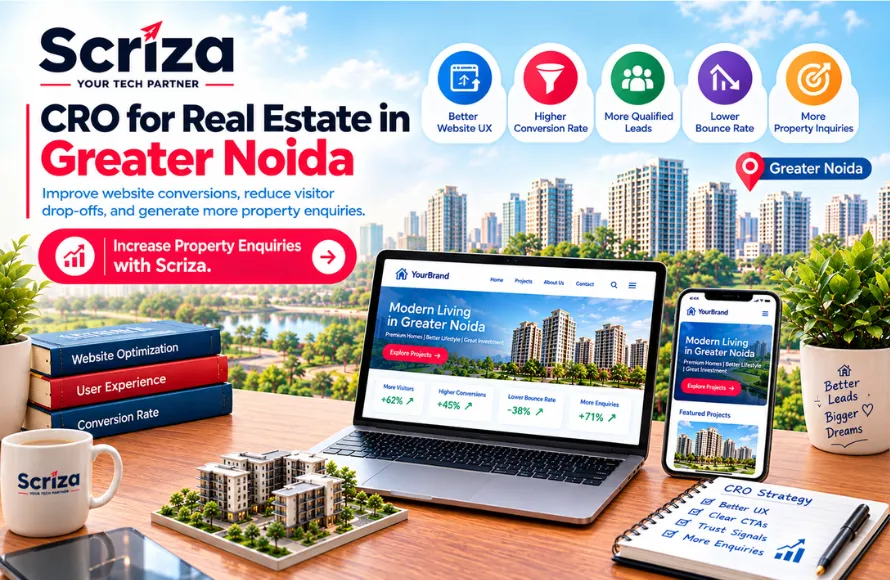
A real estate website may receive visitors who are genuinely interested in buying a property, yet only a few of them may contact the business.
Some visitors compare property prices but cannot find complete details. Others want to schedule a site visit but struggle to locate the contact option. Some leave because they are unsure whether the listed property is still available.
These small issues can affect enquiries even when the website is attracting the right audience.
For real estate businesses in Greater Noida, conversion rate optimization (CRO) helps identify and fix the problems that prevent website visitors from taking the next step. The objective is to make it easier for potential buyers, investors, and sellers to find relevant information and contact the business..
Make Property Information Easier to Understand
Visitors should not have to search across multiple pages to understand whether a property suits their needs.
A useful property page should present essential details in a clear and organized format. Depending on the listing, this may include the price range, property type, size, location, amenities, availability, photographs, and project information.
For example, someone exploring residential property in Greater Noida may want to compare apartments based on location, budget, nearby facilities, and possession timelines.
When these details are easy to find, visitors can assess their options before contacting the business.
Real estate businesses should also review old listings regularly. Incorrect prices, unavailable properties, and outdated project details can reduce trust and lead to unnecessary enquiries.
Simplify the Property Enquiry Process
A lengthy enquiry form can discourage visitors who are interested but not yet ready to share extensive personal information.
Start by asking only for the details needed to respond, such as the visitor's name, phone number, and property requirement. Additional questions can be asked during the follow-up conversation when necessary.
The form should also explain what happens after submission. A short message confirming that the team will contact the visitor can make the process clearer.
For businesses that receive enquiries through multiple channels, phone calls and WhatsApp can provide useful alternatives to a form. These options should work properly on mobile devices.
The goal is not simply to collect more form submissions. It is to make it easier for interested people to start a meaningful conversation.
Improve the Experience for Mobile Visitors
Many potential buyers browse property listings on their phones. If a website loads slowly, displays difficult-to-read content or makes contact options hard to find, visitors may leave without enquiring.
Real estate businesses should ensure that property details are easy to read, images load properly and enquiry forms work smoothly on mobile devices. Regularly checking mobile usability and page speed can help identify issues that affect the visitor experience.
Build Trust Before Asking for an Enquiry
Buying or investing in property is a significant decision. Visitors often look for signs that a real estate business is credible before sharing their contact details.
A website can support this decision by presenting accurate and verifiable information.
Depending on the business, useful trust elements may include genuine property photographs, clear company details, project information, customer testimonials where authentic, and transparent contact options.
Builders and developers can also provide relevant project documentation or official links where appropriate. Property dealers can make listing details, availability, and service information clearer.
Avoid exaggerated promises or unsupported claims. Accurate information helps visitors make informed decisions and sets more realistic expectations for the sales team.
Create Landing Pages for Different Property Requirements
Not every property visitor has the same objective. Someone searching for a residential apartment may need different information from a person exploring commercial office space or looking to sell a property.
Sending every visitor to the same general page can make the journey less relevant.
Real estate businesses can create focused landing pages for specific projects, property categories, locations, or campaigns. Each page should address the visitor's likely questions and provide a relevant next step.
For example, a campaign promoting commercial property in Greater Noida could direct visitors to a page explaining the available spaces, location advantages, property specifications, and enquiry process.
This also helps businesses understand which pages and campaigns generate meaningful leads.
For businesses running paid campaigns, the landing page should match the advertisement's message. If an ad promotes a particular project or offer, visitors should be able to find that information immediately after clicking.
Track What Happens Before and After an Enquiry
Tracking website activity helps real estate businesses understand how visitors interact with property pages and enquiry forms.
Useful metrics include form submissions, phone calls, clicks on contact buttons and landing-page conversions. Businesses should also review which enquiries turn into qualified leads or site visits.
Combining website analytics with sales-team feedback can help identify where potential buyers lose interest and which improvements may be worth testing.
Test Changes Instead of Guessing
Conversion optimization is an ongoing process. A change that works for one property page may not produce the same result on another.
Real estate businesses can test individual improvements, such as changing a call-to-action label, simplifying a form, moving contact information higher on the page, or using a more relevant landing page for an advertising campaign.
Review the results against a defined goal, such as completed enquiries or qualified leads. Avoid changing too many elements at once, as this makes it harder to understand what influenced the outcome.
Not every change will improve conversions. The purpose of testing is to learn how real visitors respond and use that information to make better decisions.
How CRO Works Alongside SEO and Digital Marketing
SEO helps real estate businesses attract people searching for properties, while paid advertising and social media campaigns reach potential buyers and investors. However, bringing visitors to a website is only the first step.
Conversion rate optimization (CRO) focuses on what happens after visitors arrive. Clear property details, easy-to-use enquiry forms, visible contact options, and simple site-visit booking processes can help visitors take the next step.
For real estate businesses in Greater Noida, combining SEO, digital marketing, and CRO can create a smoother journey from discovering a property to making an enquiry.
How Scriza Can Support Real Estate Businesses
Real estate businesses need more than website visits to create sales opportunities. They need a website that helps the right visitors understand their options and take the next step with confidence.
Scriza Pvt. Ltd. helps businesses improve their digital presence through services such as website design and development, SEO services, and digital marketing solutions.
For real estate businesses, the right improvements depend on the website, visitor behaviour, lead quality, and business objectives. Reviewing these areas can help identify practical opportunities to improve enquiries without relying only on increasing traffic.
You can learn more About Scriza, explore the pricing page, or contact the team to discuss your requirements.
Final Thoughts
Real estate website conversions depend partly on how easily visitors can understand property details, compare options and contact the business.
For real estate businesses in Greater Noida, identifying usability issues and reducing unnecessary steps can create a smoother visitor experience and improve opportunities to generate relevant enquiries.
Related News

Digital Marketing for eCommerce Automation Companies in Delhi NCR
13 Oct 2026
Content Marketing for Property Developers in Ghaziabad
13 Oct 2026
Real Estate Social Media Marketing Services in Gurugram
13 Oct 2026
Digital Marketing Services for Real Estate Developers in Noida
12 Oct 2026
Social Media Marketing Agency for Real Estate Businesses in Gurugram
12 Oct 2026
Digital Marketing Strategies for eCommerce Marketplaces in Delhi NCR
12 Oct 2026
Performance Marketing Agency for Real Estate Businesses in Delhi NCR
12 Oct 2026
Categories

AI Business Solutionsa
AI Solutions Company in Delhi NCR Helping Businesses Across India Automate, Innovate & Grow

Answer Engine Optimization (AEO)
Professional Answer Engine Optimization (AEO) Services in Delhi NCR for Businesses Across India

E-Commerce Development
Professional eCommerce Development Services in Delhi NCR for Businesses Across India

Generative Engine Optimization (GEO)
Professional Generative Engine Optimization (GEO) Services in Delhi NCR for Businesses Across India

Mobile Application Development
Professional Mobile Application Development Services in Delhi NCR for Businesses Across India

Paid Marketing
Professional Paid Marketing Services in Delhi NCR for Businesses Across India

Search Engine Optimization (SEO)
Professional Search Engine Optimization (SEO) Services in Delhi NCR for Businesses Across India

Software Development
Custom Software Development Services in Delhi NCR for Businesses Across India

Website Development
Professional Website Development Services in Delhi NCR for Businesses Across India

Grow Your Business with Performance Marketing
Commit for 3 months and get 2 video shoots absolutely FREE.