
Digital Marketing for eCommerce Automation Companies in Delhi NCR
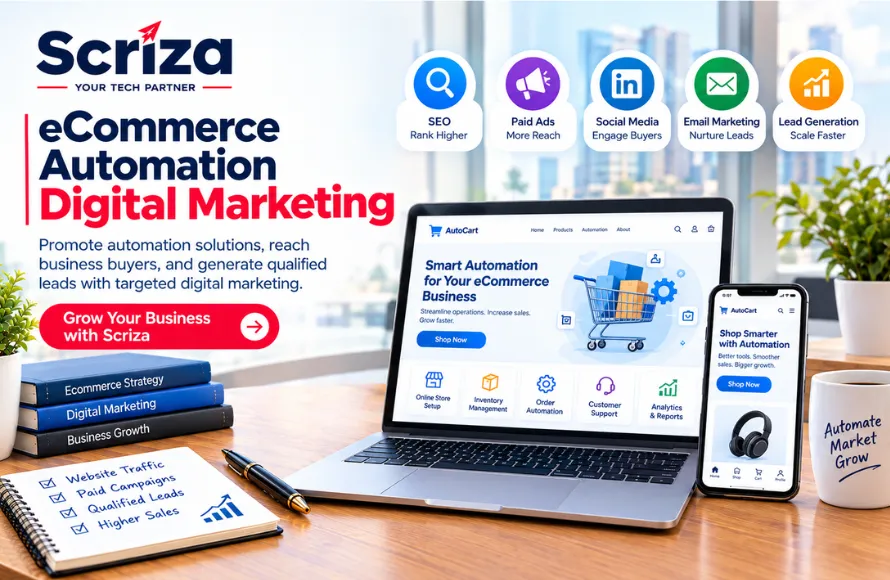
An eCommerce automation product can help businesses simplify repetitive tasks, manage orders more efficiently, improve inventory visibility, and reduce manual work. But offering useful technology does not automatically mean the right businesses will discover it.
An online seller may be looking for better order processing, while a growing eCommerce company may need help connecting its inventory, sales channels, and fulfilment operations. Both may need automation, but their requirements are different.
For eCommerce automation companies in Delhi NCR, digital marketing helps communicate these differences, reach relevant decision-makers, and turn product interest into meaningful business enquiries.
Explain the Problem Your Automation Product Solves
Businesses rarely search for software simply because they want another tool. They are usually trying to solve an operational problem.
For example, an online seller handling orders across multiple platforms may struggle with manual updates, stock mismatches, or delayed order processing.
Digital marketing should explain how the product addresses these specific challenges instead of relying only on technical feature lists.
Website pages, advertisements, and marketing content can show the tasks the software supports, how the workflow operates, and which types of businesses may benefit from it.
Use SEO to Reach Businesses Actively Looking for Solutions
Search engine optimization can help automation companies appear when potential customers research relevant products or operational challenges.
Depending on the product's actual capabilities, useful topics might include eCommerce order automation, inventory synchronisation, automated order processing, or marketplace management software.
Create dedicated service or product pages for the main solutions and support them with practical articles that answer buyer questions.
For example, an article explaining how businesses can reduce manual order processing can link to a relevant automation product page. This gives readers useful information while helping them explore the solution.
Create Content That Helps Buyers Evaluate the Product
B2B software buyers often need to understand how an automation product fits their existing operations before making a decision.
Use product demonstrations, implementation guides, integration details, and genuine case studies to explain how the solution works in real business environments.
For example, a product walkthrough can show how orders move between connected sales channels, while a case study can explain a customer's experience using the software.
Keep examples accurate and avoid promising results that cannot be verified.
Use LinkedIn to Reach Decision-Makers
For automation companies selling to other businesses, LinkedIn can support visibility among eCommerce founders, operations managers, technology leaders, and other relevant professionals.
Rather than publishing only product announcements, share useful insights about order management, inventory workflows, operational bottlenecks, and software integration.
Product demonstrations and customer examples can help explain how the solution works in practice.
Paid campaigns can also be tested against relevant professional audiences, but targeting should reflect the company's actual customer profile and budget.
Build Landing Pages Around Specific Solutions
A dedicated landing page helps potential customers understand how a particular automation solution meets their needs.
For products covering inventory management, order processing, or marketplace integration, create relevant pages that explain the use case, key features, supported integrations, and expected benefits.
Include a clear next step, such as requesting a demo or speaking with the team, so interested visitors know how to proceed.
Improve Conversions From Website Visits
Bringing relevant visitors to a website is only one part of digital marketing. The next step is helping interested businesses enquire about the product.
Make it easy for visitors to understand the solution, explore its capabilities, and request a demo. Clear calls to action, simple enquiry forms, and genuine product screenshots can make this process easier.
Track demo bookings, qualified enquiries, and form submissions to identify where potential customers may be dropping off.
Measure Marketing by Business Outcomes
For eCommerce automation companies, marketing performance should be assessed beyond website traffic and social media engagement.
Useful metrics include:
Qualified B2B enquiries
Demo requests and completed demonstrations
Cost per qualified lead
Landing page conversion rate
Lead-to-opportunity rate
Sales opportunities by marketing channel
Customer acquisition cost, where measurable
These metrics help identify which campaigns attract relevant prospects and which channels contribute to the sales pipeline.
Marketing and sales teams should also share feedback. If leads repeatedly lack the required business size, platform, or use case, targeting and messaging may need adjustment.
Digital Marketing for eCommerce Automation Companies in Delhi NCR
eCommerce automation companies in Delhi NCR can use digital marketing to connect with local businesses as well as customers across wider markets.
The right strategy depends on the product, target industry, supported platforms, and ideal customer profile. SEO, targeted campaigns, and product-focused content should work together to help potential buyers understand the solution and request a demo.
The aim is to attract relevant businesses rather than simply increase website traffic.
How Scriza Can Help
Scriza Pvt. Ltd. offers digital marketing services to help businesses improve their online visibility, communicate their offerings, and generate relevant enquiries.
For eCommerce automation companies, marketing activities can focus on product-specific SEO, targeted advertising, content marketing, landing pages, and conversion optimisation.
Learn more about the company through Scriza About Us.
Explore available services and packages through Scriza Packages & Pricing.
If you want to improve the online visibility of your eCommerce automation product, contact Scriza Pvt. Ltd. to discuss your requirements.
Final Thoughts
An eCommerce automation product needs more than a list of features to attract business customers. Potential buyers need to understand the operational problem it solves, how it fits their workflow, and why it deserves consideration.
For eCommerce automation companies in Delhi NCR, a focused digital marketing strategy can connect product education with search visibility, targeted campaigns, and a straightforward demo process.
The goal is to attract relevant businesses, build confidence in the solution, and turn genuine interest into qualified sales opportunities.
Related News
Content Marketing for Property Developers in Ghaziabad
13 Oct 2026
Real Estate Social Media Marketing Services in Gurugram
13 Oct 2026
Conversion Rate Optimization for Real Estate Businesses in Greater Noida
13 Oct 2026
Digital Marketing Services for Real Estate Developers in Noida
12 Oct 2026
Social Media Marketing Agency for Real Estate Businesses in Gurugram
12 Oct 2026
Digital Marketing Strategies for eCommerce Marketplaces in Delhi NCR
12 Oct 2026
Performance Marketing Agency for Real Estate Businesses in Delhi NCR
12 Oct 2026
Categories

AI Business Solutionsa
AI Solutions Company in Delhi NCR Helping Businesses Across India Automate, Innovate & Grow

Answer Engine Optimization (AEO)
Professional Answer Engine Optimization (AEO) Services in Delhi NCR for Businesses Across India

E-Commerce Development
Professional eCommerce Development Services in Delhi NCR for Businesses Across India

Generative Engine Optimization (GEO)
Professional Generative Engine Optimization (GEO) Services in Delhi NCR for Businesses Across India

Mobile Application Development
Professional Mobile Application Development Services in Delhi NCR for Businesses Across India

Paid Marketing
Professional Paid Marketing Services in Delhi NCR for Businesses Across India

Search Engine Optimization (SEO)
Professional Search Engine Optimization (SEO) Services in Delhi NCR for Businesses Across India

Software Development
Custom Software Development Services in Delhi NCR for Businesses Across India

Website Development
Professional Website Development Services in Delhi NCR for Businesses Across India

Grow Your Business with Performance Marketing
Commit for 3 months and get 2 video shoots absolutely FREE.