
Digital Marketing Strategies for eCommerce Marketplaces in Delhi NCR
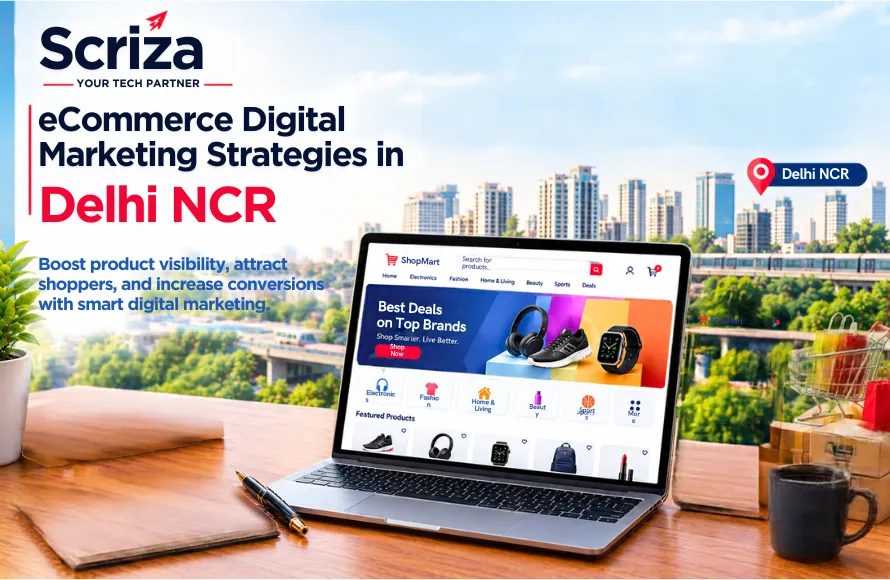
An eCommerce marketplace can have hundreds or thousands of products and still struggle to attract enough customers.
The problem may not be the products themselves. Customers may simply not be discovering them, comparing them effectively, or finding enough reasons to complete their purchase.
For marketplaces operating in Delhi NCR, digital marketing can help connect products with people at different stages of the buying journey.
The focus should not be on using every available marketing channel. It should be on choosing the channels and strategies that support product discovery, customer acquisition, conversions, and repeat purchases.
Start With Product Discovery
Customers cannot buy products they cannot find. eCommerce marketplaces should make products easy to discover through search engines, social media, advertisements and clear website navigation.
Optimised product titles, useful descriptions and well-organised categories help customers find relevant products and understand what the marketplace offers.
Build SEO Around Products and Categories
SEO can help eCommerce marketplaces attract customers through organic search. Instead of focusing only on the homepage, businesses should optimise category pages, product pages and useful buying guides.
Category pages should organise products clearly, offer relevant filters and help customers compare options. Individual product pages should provide accurate descriptions, images, pricing and other essential details.
The goal is to create useful pages that help customers find the right products without repeating keywords unnecessarily.
Use Paid Advertising for Faster Reach
SEO can take time to build, while paid advertising can help marketplaces reach relevant audiences more quickly.
Google Ads can be useful for capturing product-related searches, while social advertising can introduce products to potential customers based on relevant audience signals.
The important part is not simply increasing ad spend.
Campaigns should be monitored based on meaningful outcomes such as:
Product views
Add-to-cart actions
Purchases
Cost per acquisition
Revenue generated
Return on advertising spend
This helps identify which campaigns deserve more investment.
Social Media Should Show Products in Context
Instead of repeatedly posting product images, eCommerce marketplaces can use social media to demonstrate products, answer common questions and share genuine customer experiences.
Useful content helps customers understand products and encourages them to explore the marketplace.
Content Can Support the Buying Decision
Content marketing can help when customers need more information before purchasing.
For example, a marketplace selling electronics may publish comparison guides. A fashion marketplace may create styling or size-related content. A home and lifestyle marketplace may publish product-selection guides.
The content should connect naturally with relevant products.
A useful journey can look like:
Helpful content - Product category - Product page - Purchase
This gives content a clear commercial purpose without making every article feel like an advertisement.
Improve Product Pages and Mobile Shopping
More traffic does not automatically mean more sales. Product pages should provide clear images, pricing, specifications, delivery details and easy purchase options.
The website should also work smoothly on mobile devices, with fast-loading pages, simple navigation and an easy checkout process. A better shopping experience helps customers make decisions and complete their purchases.
Mobile Shopping Should Be a Priority
A large amount of online shopping happens through smartphones.
A marketplace should therefore provide a smooth mobile experience from product discovery through checkout.
Navigation, images, filters, product information and purchase actions should work properly on smaller screens.
Page speed is also important. A slow shopping experience can create unnecessary friction before the customer even reaches checkout.
Build Trust Around the Marketplace
Customers need confidence before entering payment details or placing an order.
Trust can be supported through:
Clear business information
Customer reviews
Transparent pricing
Delivery information
Return policies
Secure payment options
Seller information where relevant
Accessible customer support
For a marketplace, trust can become particularly important because customers may be purchasing from different sellers through the same platform.
Use Data to Understand Customer Behaviour
Digital marketing decisions become stronger when they are based on actual customer behaviour.
A marketplace can examine:
Which products receive the most views
Which categories generate purchases
Where users abandon carts
Which advertising channels generate sales
Which pages have high exit rates
Which products receive repeat purchases
Which customer segments respond to campaigns
These insights can influence future advertising, content, product promotion and website improvements.
Personalisation Can Improve Product Discovery
Personalised recommendations can help customers find relevant products more easily. Suggestions based on browsing behaviour or related items can make shopping more convenient and encourage additional purchases.
Measure Business Results, Not Just Traffic
A marketplace should look beyond website visits and social media engagement.
Important metrics can include:
Revenue
Purchases
Conversion rate
Customer acquisition cost
Average order value
Cart abandonment
Repeat purchase rate
Return on advertising spend
Organic revenue
Customer lifetime value
These numbers provide a much clearer picture of whether digital marketing is contributing to sustainable growth.
How Scriza Can Help
Scriza Pvt. Ltd. can help eCommerce marketplace businesses develop digital marketing strategies around product visibility, customer acquisition, conversions and retention.
The approach can combine SEO, paid advertising, social media, content marketing, conversion optimisation and retargeting based on the marketplace's products and growth objectives.
You can learn more about Scriza through Scriza About Us or explore available services and packages through Scriza Packages & Pricing.
If you are planning to improve digital marketing for your eCommerce marketplace in Delhi NCR, you can contact Scriza Pvt. Ltd. to discuss your requirements.
Final Thoughts
Digital marketing for an eCommerce marketplace is not simply about bringing more visitors to a website.
The bigger opportunity is to make the entire customer journey work better —from discovering a product and comparing options to completing a purchase and returning again.
For eCommerce marketplaces in Delhi NCR, a practical digital marketing strategy can combine SEO, paid advertising, social media, content, CRO, retargeting and customer retention around clear business goals.
The focus should always be on creating a better path from product discovery to purchase and repeat business.
Related News
Digital Marketing for eCommerce Automation Companies in Delhi NCR
13 Oct 2026

Content Marketing for Property Developers in Ghaziabad
13 Oct 2026

Real Estate Social Media Marketing Services in Gurugram
13 Oct 2026
Conversion Rate Optimization for Real Estate Businesses in Greater Noida
13 Oct 2026
Digital Marketing Services for Real Estate Developers in Noida
12 Oct 2026
Social Media Marketing Agency for Real Estate Businesses in Gurugram
12 Oct 2026
Performance Marketing Agency for Real Estate Businesses in Delhi NCR
12 Oct 2026
Categories

AI Business Solutionsa
AI Solutions Company in Delhi NCR Helping Businesses Across India Automate, Innovate & Grow

Answer Engine Optimization (AEO)
Professional Answer Engine Optimization (AEO) Services in Delhi NCR for Businesses Across India

E-Commerce Development
Professional eCommerce Development Services in Delhi NCR for Businesses Across India

Generative Engine Optimization (GEO)
Professional Generative Engine Optimization (GEO) Services in Delhi NCR for Businesses Across India

Mobile Application Development
Professional Mobile Application Development Services in Delhi NCR for Businesses Across India

Paid Marketing
Professional Paid Marketing Services in Delhi NCR for Businesses Across India

Search Engine Optimization (SEO)
Professional Search Engine Optimization (SEO) Services in Delhi NCR for Businesses Across India

Software Development
Custom Software Development Services in Delhi NCR for Businesses Across India

Website Development
Professional Website Development Services in Delhi NCR for Businesses Across India

Grow Your Business with Performance Marketing
Commit for 3 months and get 2 video shoots absolutely FREE.