
Property Website Development Services for Real Estate Businesses in Noida
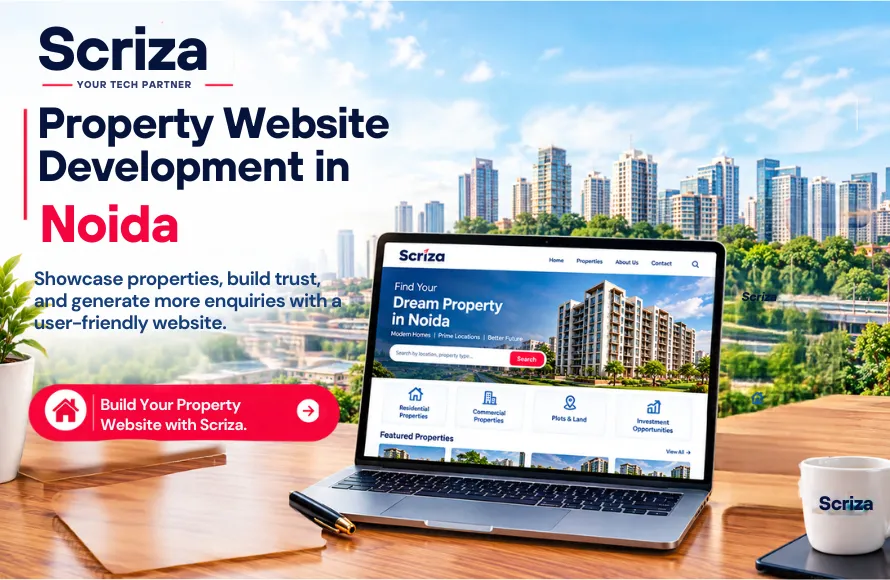
For a real estate business, a website is often the first place where a potential buyer starts understanding a property.
Before making a call or planning a site visit, buyers may want to see property details, images, location, pricing, amenities, floor plans, nearby facilities, and other important information. If this information is difficult to find, the visitor may simply leave and check another property website.
This is why property website development is more than designing attractive pages. A good real estate website should make property discovery easier, build confidence, and help interested visitors take the next step.
For real estate businesses in Noida, the website should also be designed around the way local buyers search, compare, and enquire about properties.
What Should a Real Estate Website Do?
A good real estate website should help potential buyers understand a property without making them search through multiple pages for basic information.
Before getting in touch with the business, a visitor should be able to quickly understand:
What properties are available?
Where are they located?
What type of property is being offered?
What sizes or configurations are available?
What amenities or facilities are included?
Where can they find more details?
How can they contact the business?
When this information is presented clearly, visitors can explore properties more easily and decide whether they want to take the next step, such as requesting more information, making a call, or scheduling a site visit.
Property Listings Should Be Easy to Explore
If a real estate business has multiple properties, the website needs a clear listing structure.
Visitors should be able to find properties based on factors such as:
Location
Property type
Budget
Size
Configuration
Residential or commercial use
Availability
Each property should have its own dedicated page rather than displaying everything on one crowded page.
A well-structured property page can include photographs, specifications, amenities, location information, pricing details, floor plans, FAQs, and enquiry options.
High-Quality Property Information Builds Trust
Real estate buyers usually have many questions before they enquire.
A website can address these questions directly by providing useful information about the property and its surroundings.
For example, a property page in Noida may explain its connectivity, nearby business areas, schools, hospitals, shopping destinations, metro access, or other relevant location advantages.
The purpose is not to fill the page with promotional statements. It is to give buyers enough useful information to make an informed decision.
Mobile-Friendly Design Is Essential
Many property searches happen on smartphones.
If a website is difficult to navigate on a mobile screen, visitors may leave before viewing the property properly.
A mobile-friendly real estate website should have:
Easy navigation
Readable text
Properly displayed property images
Fast-loading pages
Simple enquiry forms
Click-to-call options
WhatsApp or other direct contact options
The buyer should be able to move from property discovery to enquiry without unnecessary steps.
Make Property Enquiries Simple
A potential buyer may be interested in a property but still leave the website if it is difficult to ask a question or get in touch with the business.
The enquiry process should be simple and easy to understand. Visitors should be able to find clear options to ask for more information, request a callback, make a phone call, or schedule a site visit.
It is also useful to keep enquiry forms short. Asking only for important details such as name, phone number, email, and the type of property they are interested in can make the process easier for visitors.
For real estate businesses in Noida, a simple enquiry process can help interested buyers move from browsing property details to taking the next step without unnecessary effort.
Build Pages Around Noida Property Searches
Local relevance can make a significant difference to a real estate website.
Instead of creating generic pages, businesses can develop useful location-focused sections around the areas and property types they serve.
For example, a website may have dedicated content for:
Residential properties in Noida
Commercial properties in Noida
Properties in specific sectors
New property projects
Property investment opportunities
Property buying guides
Locality information
This can help visitors find more relevant information while also supporting the website's organic search strategy.
SEO Should Be Considered During Development
SEO should not be added after the website is completely developed.
The website structure, URLs, page headings, content, internal linking, image optimisation, mobile experience, and technical setup can all influence search visibility.
For real estate businesses, individual property pages can also become valuable search-entry points when they contain useful, original, and relevant information.
This means the website should be built with both users and search engines in mind.
Property Images and Videos Matter
Real estate is highly visual.
Good photographs can help visitors understand the property before they decide to enquire. Videos, walkthroughs, floor plans, location maps, and virtual tours can provide additional context where appropriate.
However, visuals should support the information rather than slow the website down.
Images should be properly optimised so that the website remains fast while still presenting properties professionally.
Connect the Website With Your Marketing
A property website should not work separately from the rest of the marketing strategy.
Traffic may come from:
Google search
Google Ads
Facebook
Instagram
Property campaigns
Social media content
Email or WhatsApp campaigns
Local SEO
All these channels can direct potential buyers to relevant property pages or landing pages.
For example, an advertisement promoting a particular property should ideally take the visitor directly to that property's page instead of sending them to the website homepage.
This creates a smoother journey and can improve the chances of enquiry.
Add Trust-Building Information
Buying property involves a high level of consideration, so visitors need reasons to trust the business.
A real estate website can include information such as:
Company background
Completed projects
Current projects
Client testimonials
Project documentation where appropriate
Contact details
Office information
Frequently asked questions
Clear and genuine information can make a website feel more reliable than a page filled only with sales messages.
Website Speed Can Affect the Buyer Journey
A property website may contain many images, videos, listings, and other media. Without proper optimisation, this can make pages slow.
Slow pages can frustrate visitors, particularly on mobile devices.
During development, attention should be given to image optimisation, page structure, code efficiency, caching, and other technical factors that can contribute to a better browsing experience.
Track What Visitors Are Doing
Once the website is live, businesses should understand how visitors interact with it.
Useful metrics can include:
Property page views
Enquiry form submissions
Phone clicks
WhatsApp clicks
Popular property pages
Traffic sources
Landing page performance
Visitor-to-enquiry conversion rate
This information can show which properties and marketing channels are generating genuine interest.
Property Website Development for Real Estate Businesses in Noida
A successful property website is not simply a collection of property photographs and contact numbers.
It should help a visitor discover a property, understand its value, evaluate the information, build confidence, and take action.
For real estate businesses in Noida, combining a clear property structure with local content, mobile-friendly design, SEO, strong visuals, and simple enquiry options can turn the website into an important part of the sales process.
How Scriza Can Help
A real estate website works best when its design, property information, SEO, and enquiry process are planned together. The goal should be to make it easier for potential buyers to find relevant properties, understand the available options, and take the next step.
For real estate businesses in Noida, this may include creating property-focused pages, improving the website experience, making important information easy to find, and building the website with search visibility and enquiries in mind.
Scriza Pvt. Ltd. can help businesses with website development, SEO, digital marketing, and conversion-focused website strategies based on their business requirements.
You can learn more through Scriza About Us, visit Scriza Packages & Pricing, or Contact Scriza Pvt. Ltd. to discuss your website requirements.
Final Thoughts
A property website should make the buying journey easier, not make visitors work harder to find information.
When property listings, location details, visuals, SEO, trust elements, and enquiry options are brought together properly, the website can become much more than an online brochure.
For real estate businesses in Noida, the right website can become a central platform for property discovery, digital marketing, and genuine customer enquiries.
Categories

AI Business Solutionsa
AI Solutions Company in Delhi NCR Helping Businesses Across India Automate, Innovate & Grow

Answer Engine Optimization (AEO)
Professional Answer Engine Optimization (AEO) Services in Delhi NCR for Businesses Across India

E-Commerce Development
Professional eCommerce Development Services in Delhi NCR for Businesses Across India

Generative Engine Optimization (GEO)
Professional Generative Engine Optimization (GEO) Services in Delhi NCR for Businesses Across India

Mobile Application Development
Professional Mobile Application Development Services in Delhi NCR for Businesses Across India

Paid Marketing
Professional Paid Marketing Services in Delhi NCR for Businesses Across India

Search Engine Optimization (SEO)
Professional Search Engine Optimization (SEO) Services in Delhi NCR for Businesses Across India

Software Development
Custom Software Development Services in Delhi NCR for Businesses Across India

Website Development
Professional Website Development Services in Delhi NCR for Businesses Across India

Grow Your Business with Performance Marketing
Commit for 3 months and get 2 video shoots absolutely FREE.